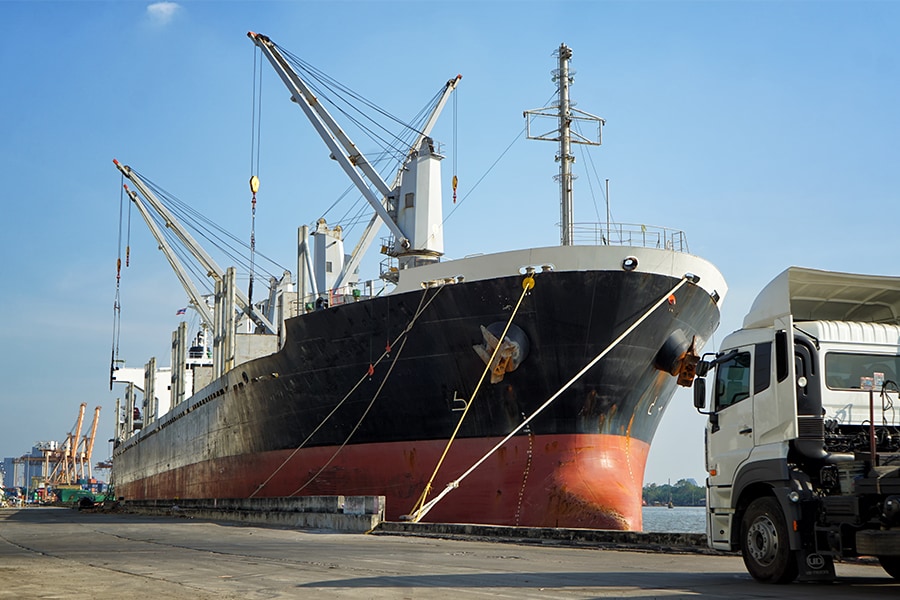
The Strait of Hormuz is a major maritime choke point for world shipping and the recent blockade of same has sent shockwaves through global chemical supply chains, serving as yet another stark reminder of how geopolitical events can bring production lines to a grinding halt.
With approximately 20% of the world’s oil passing through this critical chokepoint – and countless petrochemical feedstocks along with it – chemical manufacturers are once again scrambling to secure supplies, manage costs, and keep customers satisfied.
But this isn’t the first disruption we’ve faced, and it certainly won’t be the last. From the COVID-19 pandemic to the Suez Canal blockage, from the Texas freeze to ongoing Red Sea tensions, the chemical industry has faced storm after storm. The question isn’t whether another disruption will occur (because it will) – it’s whether your organisation will be ready when it does
The current crisis: understanding the stakes
The Strait of Hormuz situation perfectly illustrates the vulnerabilities inherent in global chemical supply chains. Key impacts include:
- Feedstock shortages: Disrupted crude oil and natural gas supplies affecting everything from ethylene to aromatics production
- Skyrocketing freight costs: Alternative shipping routes adding time and significant expense to deliveries
- Contract complications: Force majeure declarations creating legal and commercial headaches
- Customer relationships: Downstream manufacturers facing their own production challenges
For many chemical companies including PlusChem members in Europe and beyond, this crisis has exposed uncomfortable truths about over-reliance on single sourcing, just-in-time inventory models pushed to their limits, and insufficient visibility into supplier networks.
Immediate actions: what you need to do today
1. Activate your ‘war room’
If you haven’t already, establish a dedicated crisis response team with representation from:
- Procurement and supply chain
- Operations and manufacturing
- Sales and customer service
- Finance
- Legal and compliance
- Communications
This team should meet at least a few times weekly to assess the evolving situation, make rapid decisions, and coordinate responses across the organisation.

2. Map Your Exposure
Conduct an immediate assessment of your supply chain vulnerability:
| Priority | Action |
| Critical | Identify any materials that is likely to transiting through affected regions |
| High | Calculate current inventory positions and consumption rates |
| Medium | Assess alternative supplier capabilities and lead times |
| Ongoing | Monitor customer inventory positions and demand signals |
3. Communicate Proactively
Silence breeds uncertainty – and uncertainty breeds panic buying and exhausted relationships. Reach out to:
- Customers: Provide honest assessments of potential impacts and your mitigation plans
- Suppliers: Confirm their status and explore emergency supply options
- Logistics partners: Understand capacity constraints and alternative routing options
- Internal stakeholders: Keep employees informed to prevent ill-informed rumours
4. Explore Emergency Supply Options
In crisis mode, consider options you might normally avoid:
- Spot market purchases (accepting premium pricing for security of supply)
- Competitor partnerships (in unprecedented situations, mutual aid agreements can benefit everyone)
- Alternative grades or specifications that customers might temporarily accept
- Regional inventory redistribution within your own network
Building resilience: the medium-term playbook
Once the immediate crisis is contained, it’s time to build systems that prevent future tussles.
Diversify your supplier base
The days of single-sourcing for cost optimisation is no longer a valid business strategy. Instead, distributors need to implement a structured approach:
The 70-20-10 rule
- 70% from your primary, most cost-effective supplier
- 20% from a qualified secondary supplier (ideally in a different region)
- 10% from a third supplier or held as strategic inventory
This will likely increase costs marginally but it’s a small cost compared to the alternative – a complete breakdown in supply.
Regionalise strategic supply chains
Global optimisation made sense in a stable world. Today’s reality demands a different approach:
“Think global, but source regional” should become your new mantra.
Consider establishing regional supply networks for critical materials:
- Americas: Leverage growing US Gulf Coast capacity and Canadian resources
- Europe: Explore North Sea, Mediterranean, and emerging green chemistry sources
- Asia-Pacific: Diversify beyond any single country’s dominance (e.g. India for specialty chemicals).
Rethink inventory strategy
Just-in-time (JIT) has become just-not-enough. Develop a tiered inventory strategy:
- Strategic reserves: 60 – 90 days of critical feedstocks and materials with limited alternatives
- Buffer stock: 30 – 45 days of important materials with some supplier options
- Standard inventory: Traditional JIT for commodities with robust, diverse supply
The carrying cost of additional inventory is insurance and should be priced accordingly.
Invest in supply chain visibility
You can’t manage what you can’t see. Modern supply chain visibility platforms can provide:
- Real-time tracking of shipments and inventory across tiers
- Early warning systems for geopolitical and weather events
- Predictive analytics for potential disruption scenarios
- Automated alerts when inventory positions approach critical thresholds

Future proofing: the long-term transformation
Embrace ‘digital twins’
Leading chemical manufacturers are creating digital replicas of their entire supply chains. These digital twins enable:
- Scenario modelling: “What if the Strait of Hormuz stays closed for 6 months?”
- Optimisation: Identifying the best response strategies before crises hit
- Risk quantification: Putting dollar figures on vulnerability to justify resilience investments
Accelerate feedstock flexibility
Invest in manufacturing flexibility that allows for quick switching between feedstocks:
- Cracker flexibility: Ability to process different feeds (ethane, naphtha, LPG)
- Bio-based alternatives: Develop capabilities to use renewable feedstocks
- Recycled inputs: Mechanical and chemical recycling as supplementary raw material sources
Build strategic partnerships
Move beyond transactional supplier relationships:
- Joint ventures: Co-invest in capacity with key suppliers
- Long-term contracts: Secure supply through take-or-pay agreements with flexibility clauses
- Consortium approaches: Partner with other manufacturers (even competitors) on shared infrastructure
Develop local-for-local capabilities
Where feasible, establish production capabilities that can serve regional markets independently:
- Modular manufacturing units that can be deployed closer to customers
- Licensing arrangements with regional partners
- Toll manufacturing agreements as backup production options
The financial case for resilience
Sceptical CFOs may question resilience investments. Here’s how to make the case:
Quantify the Cost of Disruption
Calculate the true cost of past disruptions:
- Lost sales and margin
- Premium procurement costs
- Expedited freight expenses
- Customer penalties and contract losses
- Long-term customer defection
- Brand and reputation damage
For most chemical manufacturers and distributors, a single major disruption costs more than years of resilience investments.
Lessons from leaders
Some of our member companies have already made significant progress. Common themes from them include:
- Executive ownership: Supply chain resilience should be a board-level topic, not just an operations concern
- Integrated planning: Sales & Operations Planning (S&OP) processes that explicitly incorporate risk scenarios
- Continuous monitoring: Dedicated teams tracking geopolitical, weather, and market risks
- Regular testing: Tabletop exercises and simulations to validate response plans
- Learning culture: Rigorous post-mortems after every disruption to capture lessons
The bottom line
The Strait of Hormuz crisis is a painful reminder of supply chain fragility – but it’s also an opportunity. Organisations that use this moment to fundamentally rethink their approach to supply chain resilience will emerge stronger. Those that simply wait for the crisis to pass will face the same scramble when the next disruption inevitably arrives.
The chemical industry has always been about transformation – turning raw materials into products that power our modern life. It’s time to apply that same attitude to our supply chains. If you need a reliable, established source of chemicals, contact PlusChem today.