Smart farming is fundamentally about harnessing technology to make agriculture more efficient and sustainable. It represents a significant departure from traditional methods, introducing digital tools that enable farmers to make more informed decisions, cultivate healthier crops, and manage their livestock with greater precision.
The rise of smart agriculture
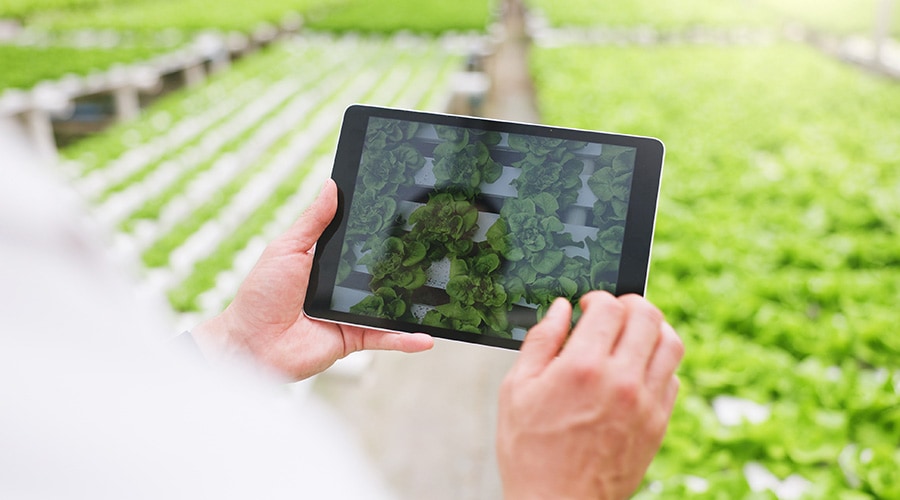
For centuries, farming relied heavily on experience, intuition, and manual labour. Farmers observed the weather, felt the soil, and generally knew their land intimately. While that deep connection to the land and its rhythms remains absolutely vital, smart farming introduces an additional layer of data-driven insight and automation that can significantly enhance those time-honoured traditional practices.
By integrating advanced technologies such as sensors, satellite imagery, and artificial intelligence, farmers are now able to monitor crop health, soil conditions, and weather patterns with unprecedented precision. This fusion of age-old agricultural knowledge with cutting-edge innovation not only improves efficiency and productivity but can push for more sustainable and environmentally friendly farming methods.
In essence, smart farming serves to complement and elevate the invaluable experience and intuition that farmers have developed over generations, ensuring that agriculture continues to thrive in an increasingly complex and demanding world. It’s not about replacing the farmer, but empowering them with better tools and insights.
The economic and environmental incentive
The push towards smart farming isn’t just about impressive technology – it’s driven by some very real pressures. A growing global population means we need to produce more food with fewer resources. Climate change is also throwing curveballs at traditional farming methods, making predictability harder.
Smart farming offers solutions to these challenges by optimising resource use – water, fertiliser, pesticides – and helping farmers adapt to changing environmental conditions. It’s about getting more from less, which is good for both the farmer’s bottom line, the customer’s purse and the planet.
Cyber technologies, sensors and the Internet of Things (IoT)
At the heart of smart farming lies the integration of various cyber technologies. These aren’t just standalone gadgets; they’re interconnected systems that work together to provide a comprehensive picture of the farm.
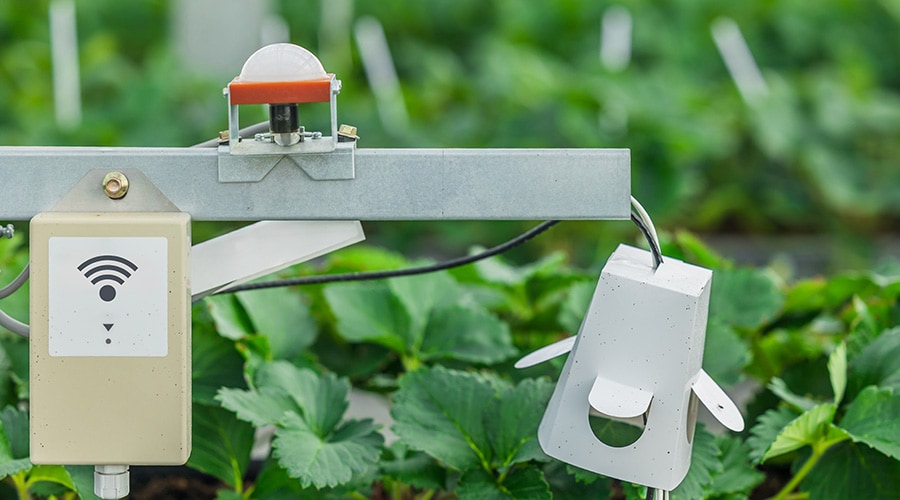
Imagine a network of tiny sensors scattered across a field, each silently collecting data. That’s the power of the Internet of Things in agriculture. These sensors can monitor everything from soil pH and nutrient levels to air temperature and humidity. They can even detect early signs of pest infestations or disease outbreaks. This data is then sent wirelessly to a central platform, giving farmers an unprecedented view of their crops’ health and needs.
Automation and monitoring in farming
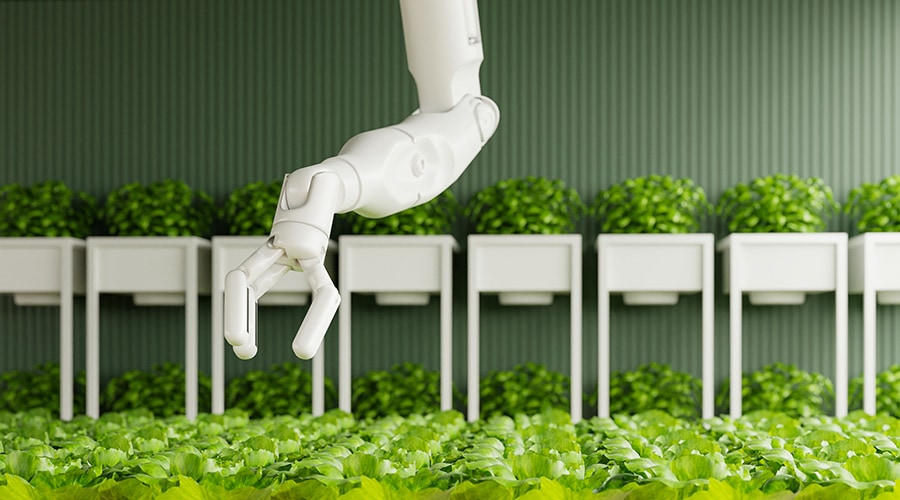
Beyond just monitoring, cyber technologies also enable automation. Robotic systems are becoming increasingly common for tasks like precise planting, targeted weeding, and even harvesting delicate crops. These robots can work tirelessly, often more accurately than humans, and can operate in conditions that might be difficult or dangerous for people. This frees up farmers to focus on more strategic aspects of their business.
Think of drones flying over fields, scanning for issues, or autonomous tractors tilling land with pinpoint accuracy. Global Positioning Systems (GPS) and Geographic Information Systems (GIS) have become indispensable and allows farmers to precisely map their fields, track equipment, and apply inputs like fertilisers exactly where they’re needed. GIS then takes this location-based data and layers it with other information – like soil type, yield maps, or even historical weather patterns – to create detailed insights.
This spatial awareness helps farmers understand variations within their fields and tailor their management accordingly.
Digital tools driving sustainability in food production
One of the most compelling aspects of smart farming is its potential to make food production significantly more sustainable. By optimising resource use and reducing waste, these digital tools contribute directly to a healthier planet. Water, fertilisers, and pesticides are costly resources, both financially and environmentally.
Smart farming techniques, driven by data, allow for their precise application. Instead of blanket spraying an entire field, sensors can identify areas that specifically need water or nutrients, reducing overall consumption. This precision-led agriculture minimises runoff into water systems and lessens the environmental impact of chemical use.
We can also see already, how smart farming can help mitigate food waste by improving crop health and predicting optimal harvest times, which reduces spoilage in the field. Furthermore, by optimising machinery routes and fuel consumption, it can lead to a reduction in greenhouse gas emissions from agricultural operations. Every drop of fuel saved and every less-spoiled crop contributes to a more sustainable food system.
Cyber security challenges
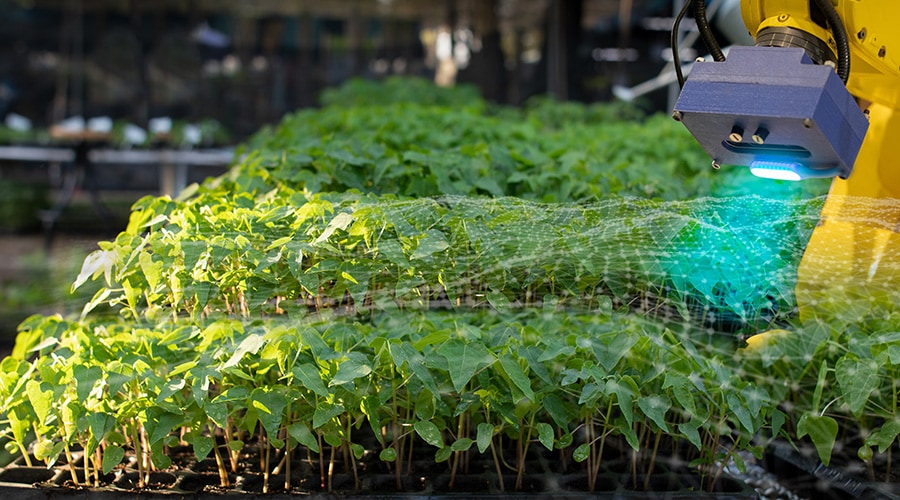
As farms become more digital and connected, they also become more vulnerable to cyber threats. This isn’t just about losing data; a cyber attack could disrupt operations, contaminate produce, or even compromise the safety of farm workers.
Consider a smart irrigation system connected to the internet. If a malicious actor gains control, they could over-water or under-water crops, causing significant damage. Similarly, ransomware attacks could lock farmers out of their essential control systems, halting production. The interconnected nature of smart farm technology means that a breach in one area could have ripple effects across the entire operation. Recently, we’ve seen attacks on supermarket fridges and freezers in France, causing millions of Euro worth of damage. Farmers, who traditionally haven’t had to worry much about cyber security, are now on the front lines of a new kind of threat.
It’s an exciting time to be involved in how food gets from the soil to tables and at PlusChem we’re working with our customers and suppliers to always offer the best solution possible.