This month we are looking at cosmetics and some of the major advancements within the industry this past century. From ancient kohl eyeliners to today’s sophisticated serums and fillers, the science behind beauty products has evolved dramatically.
Retinoids: The Gold Standard of Anti-Aging
Perhaps no discovery has had a more profound impact on skincare than retinoids. These vitamin A by-products were first studied in the 1930s, but their full cosmetic potential wasn’t properly understood until decades later. Tretinoin, the first prescription retinoid, was initially developed to treat acne in the 1970s. In addition, researchers soon noticed that patients using tretinoin experienced reduced wrinkles, improved skin texture, and more even pigmentation in their skin.
The chemistry behind retinoids is fascinating and complex. The active compounds bind to specific receptors in skin cells, accelerating cell turnover and stimulating collagen production.
Hyaluronic Acid: Nature’s Moisture Magnet
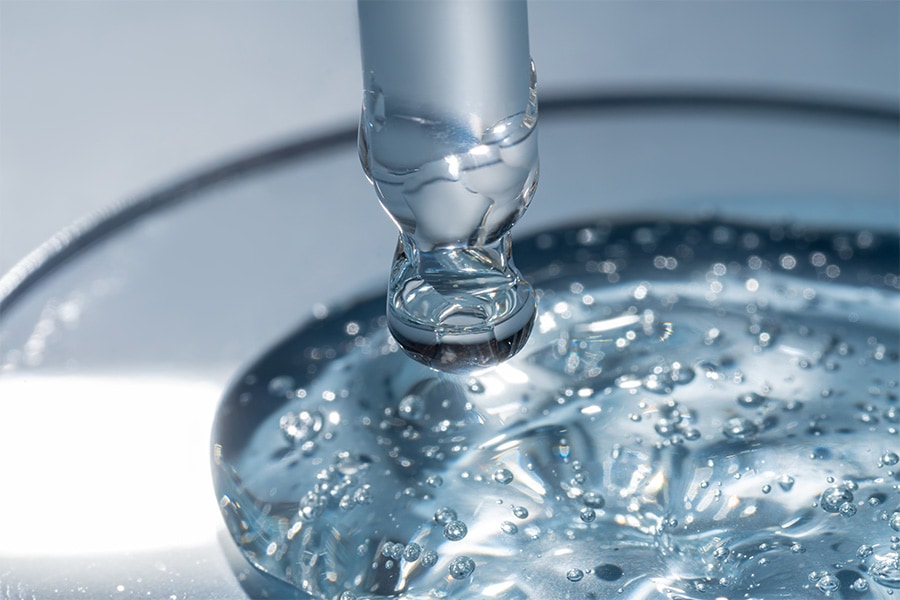
While hyaluronic (pronounced hi-ah-lew-ron-ic) acid (HA) was discovered in 1934 by Karl Meyer and John Palmer, its cosmetic applications were identified later. This naturally occurring polymer is found throughout our bodies, particularly in skin, joints, and eyes. What makes HA remarkable from a chemical standpoint is its extraordinary ability to hold water—up to 1,000 times its weight.
The molecule’s structure consists of repeating spots that create a gel-like matrix capable of attracting and retaining other chemical compounds, such as water. Cosmetic chemists learned to produce different molecular weights of HA, each serving distinct purposes. High molecular weight HA sits on the skin’s surface, creating a hydrating film, while low molecular weight HA can penetrate deeper layers for more intensive moisturization. This discovery revolutionized the hydration category and remains a staple ingredient in serums, moisturizers, and injectable fillers.
Sunscreen chemistry: Protecting against invisible damage
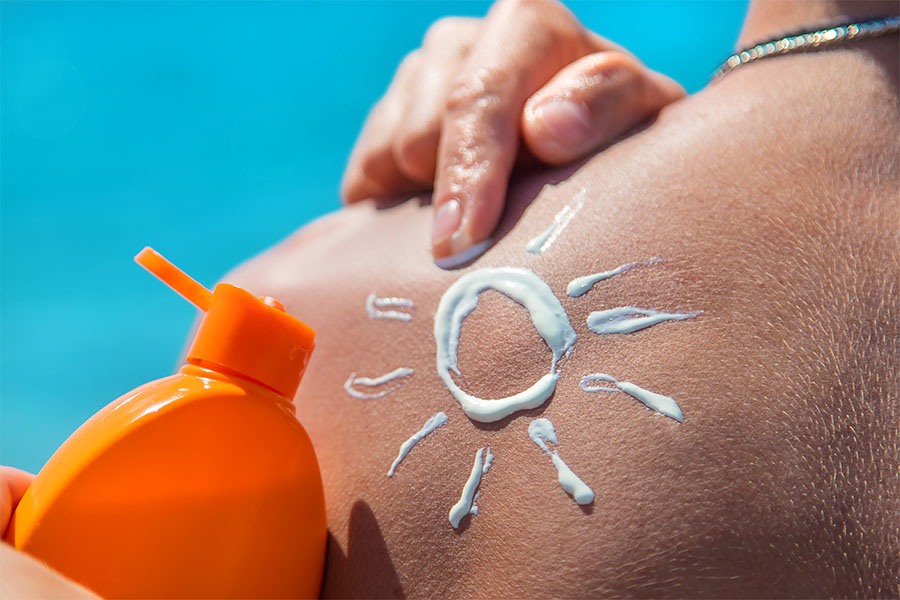
Sunscreens use UV filters to block or absorb the harmful rays from the sun. The development of effective UV filters represents one of the cosmetics industry’s most important contributions to public health. Early sunscreens relied on physical blockers like zinc oxide and titanium dioxide, which reflect UV radiation. However, these left visible white colourations on the skin.
The real breakthrough came with organic (chemical) UV filters. Compounds like avobenzone, discovered in the 1970s, absorb UV radiation and convert it to harmless heat energy. The chemistry involves conjugated molecular structures that can absorb the harmful wavelengths of light. More recently, scientists developed photostable filters and encapsulation technologies to prevent degradation, ensuring longer-lasting protection.
The discovery of broad-spectrum protection – shielding skin from both UVA and UVB rays, required understanding how different wavelengths affect skin cells at the molecular level. This knowledge has driven innovations like the European-approved filters Tinosorb S and Tinosorb M, which offer superior photostability.
Alpha Hydroxy Acids: Chemical exfoliation redefined
The cosmetic application of alpha hydroxy acids (AHAs) emerged from dermatological research in the 1970s and 1980s. Scientists Eugene Van Scott and Ruey Yu discovered that glycolic acid and lactic acid (naturally occurring in sugarcanes and milk respectively) could effectively treat various skin conditions by weakening the bonds between dead skin cells, promoting skin cell turnover and revealing smoother, even-toned skin.
The chemistry is elegant: AHAs work by disrupting the ionic bonds holding corneocytes (dead skin cells) together in the stratum corneum. This accelerates natural exfoliation, revealing fresher skin beneath. Different AHAs have varying molecular sizes – glycolic acid, being the smallest, penetrates most deeply, while larger molecules like mandelic acid work more gently on the surface.
Peptides: Cellular communication
The use of peptides in cosmetics fully began in the early 2000s with the development of signal peptides that could stimulate skin cells. Matrixyl (palmitoyl pentapeptide-4) was among the first to demonstrate that short amino acid chains could encourage collagen synthesis.
These discoveries came from the understanding of how the extracellular matrix communicates with fibroblasts. By mimicking natural peptide signals, cosmetic chemists created ingredients that essentially “trick” skin cells into behaving more youthfully. Today, dozens of peptides target specific concerns, from copper peptides for wound healing to neuropeptides (also known as ‘Nature’s Botox’) that has the ability to relax facial muscles.
Looking Forward
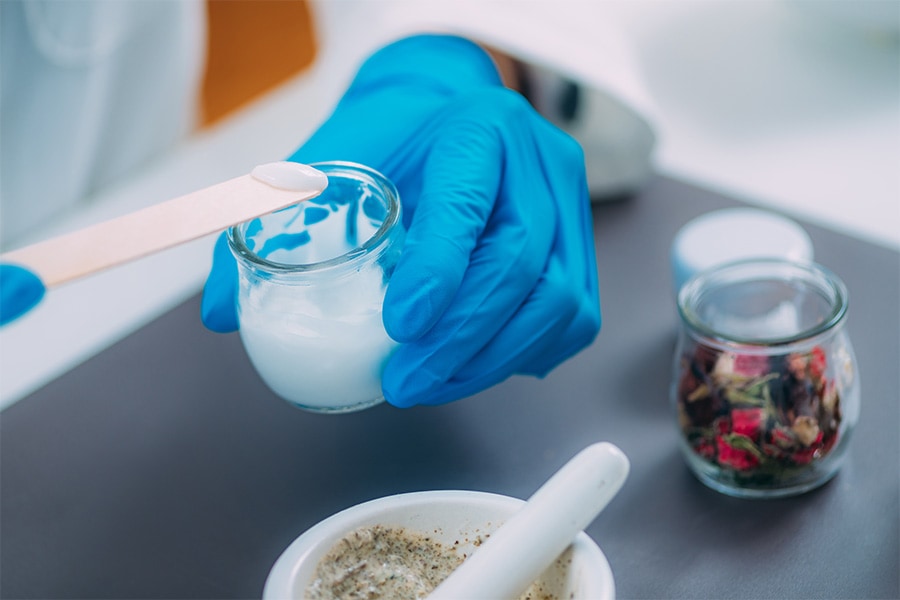
The cosmetics industry continues to benefit from chemical innovations like the ones above. Current research focuses on delivery systems like liposomes and nanoparticles that enhance ingredient penetration, as well as biotechnology-derived ingredients produced through fermentation processes. Scientists are also exploring the skin microbiome, developing prebiotics and postbiotics to support beneficial bacteria.
From understanding molecular structures to manipulating cellular pathways, chemistry remains at the heart of cosmetic innovation. These discoveries haven’t just created better beauty products—they’ve transformed how we understand skin biology and aging. As analytical techniques improve and our knowledge deepens, we can expect even more revolutionary ingredients to emerge, bridging the gap between cosmetics and medicine in ways our predecessors could never have imagined. Contact PlusChem today if you want to know more about the chemistry behind cosmetics.